3/26/2009
Cat Shit One
A little bit of background. Cat Shit One, released in the US as Apocalypse Meow, is a manga about a American recon (LRRP?) unit in Vietnam. The manga, which I've only seen the odd page here and there, provided the odd mix of gritty historical action and cute animals. In the manga, various animal species represented various ethnicities. Rabbits were Americans, cats Vietnamese, panda Chinese etc.
The animated feature looks like it'll be set in modern day. From what I've been able to read from the opening text sequence, the members of Cat Shit One are PMC Contractors.
Cool story bro.!


3/24/2009
House of Suns
Of course, like many people, I do the bulk of my reading in the hours before I go to bed. Sometimes, it's just a few minutes. But more often it's about an hour.
When I finish a book during these times, and I go to bed glad to have finished and wondering what I'll read tomorrow. Usually I feel satisfied by my read. Sometimes, rarely, I feel a little miffed or disappointed. But ultimately I'm not too picky a reader, and even if I didn't quite enjoy the journey, I always appreciate the fact that I took that journey.
But sometimes, in a great while, I finish a book that so shakes my reader's paradigm that cannot go to sleep. My mind is so stimulated by what I have read that it continues to dwell on the story well into the wee hours of the morning. Often times I will wake up, having gotten a scant few hours of rest, still thinking about said book.
House of Suns, the latest offering from Alastair Reynolds, is such a book. Other authors who have done this include the likes of Dan Simmons, George R. R. Martin, and Iain Banks. These are authors whose works are often genre-defining, or genre-busting that they for ever ruin, or at least raise the bar, of the genres they represent.
Martin did that for me for fantasy. Simmons, Reynolds and Banks do that for me for science fiction.
Let's talk about Alastair Reynolds. I remember the very first time I picked up one of his books. This was during the heyday of my employment at World's Biggest Bookstore, when the employee's discount forever implanted in me the realization that reading wasn't just a hobby, but a lifestyle choice for me. During this time, I was a science fiction and fantasy whore, picking up just about anything, mostly based on the cover art. I've read gold, and I've read dross.
Revelation Space was a big, black, shiny trade-paper back, an imposing, 500+ page tome. I started it, but within a few chapters, I realized this was not for me. I was new to the science fiction field, and not ready for idea-driven science fiction. I needed the requisite hard sci-fi as a warm up. Space-ships that morph shape? Future worlds where spider-like carriages traverse spire-ridden chasm cities? No thanks. Give me plasma-drives and kinetic-kill cannon, and worlds where I could logically (if not always intrinsically) see where we and science were headed. Revelation Space was too grand for me. I put it down for more near-sighted fare.
It wasn't for many more years that I finally pulled it from the shelf. By then, I was a little more seasoned. Dan Simmons had opened my eyes to space opera and idea-driven fiction, and I had even finished my first Iain Banks novel. This time, Reynolds had me hooked, and I soon devoured what other books he had.
House of Suns isn't set in his standard universe of Chasm City. Or, perhaps it is, but it's at such a remove as to make it seem a separate universe. The story centers around two shatterlings, two of a thousand clones of a single person who travel to the galaxy and occasionally return to exchange their memories. The story happens over time scales that are impossible for we humans to understand, and so Reynolds treats it as the characters in the story treat it--of only passing significance.
The story is also told through three points of view, made all the more interesting in that it is all in first person. I recently also finished Charles Stross' Halting State, which also did interesting things with the narrative, so Reynolds' mode was an easy swallow.
At it's core, the story is a mystery novel. A event happens, which the characters must find answers to. Crisis and conflict ensue. Meanwhile, the story is threaded with a sort of parallel tale, that recounts how the clones came to be some 6 million years ago (which is incidentally about 1000 years in the future for us). The end of the book happens at so far a remove from us and our time that it is of no bearing to us. Yet the ending is also immensely satisfying, because of it's humanism.
If I'm being vague, it's intentional. I have no desire to ruin the book, but to merely persuade others to read it. I often find that endings in books can be problematic. Though they represent two of my favourite authors, I usually have problems with the ends of their books. Stross simply wraps up his books too quickly. Banks does the same but is almost cliched in his bitter-sweetness. Reynolds isn't really an exception here, but there's something that seems more fulfilling.
Again, vague, and I apologize for it. Normally, once I've finished a book, I consider what to read next. I think I may have to wait a while before I crack open another book.
When I finish a book during these times, and I go to bed glad to have finished and wondering what I'll read tomorrow. Usually I feel satisfied by my read. Sometimes, rarely, I feel a little miffed or disappointed. But ultimately I'm not too picky a reader, and even if I didn't quite enjoy the journey, I always appreciate the fact that I took that journey.
But sometimes, in a great while, I finish a book that so shakes my reader's paradigm that cannot go to sleep. My mind is so stimulated by what I have read that it continues to dwell on the story well into the wee hours of the morning. Often times I will wake up, having gotten a scant few hours of rest, still thinking about said book.
House of Suns, the latest offering from Alastair Reynolds, is such a book. Other authors who have done this include the likes of Dan Simmons, George R. R. Martin, and Iain Banks. These are authors whose works are often genre-defining, or genre-busting that they for ever ruin, or at least raise the bar, of the genres they represent.
Martin did that for me for fantasy. Simmons, Reynolds and Banks do that for me for science fiction.
Let's talk about Alastair Reynolds. I remember the very first time I picked up one of his books. This was during the heyday of my employment at World's Biggest Bookstore, when the employee's discount forever implanted in me the realization that reading wasn't just a hobby, but a lifestyle choice for me. During this time, I was a science fiction and fantasy whore, picking up just about anything, mostly based on the cover art. I've read gold, and I've read dross.
Revelation Space was a big, black, shiny trade-paper back, an imposing, 500+ page tome. I started it, but within a few chapters, I realized this was not for me. I was new to the science fiction field, and not ready for idea-driven science fiction. I needed the requisite hard sci-fi as a warm up. Space-ships that morph shape? Future worlds where spider-like carriages traverse spire-ridden chasm cities? No thanks. Give me plasma-drives and kinetic-kill cannon, and worlds where I could logically (if not always intrinsically) see where we and science were headed. Revelation Space was too grand for me. I put it down for more near-sighted fare.
It wasn't for many more years that I finally pulled it from the shelf. By then, I was a little more seasoned. Dan Simmons had opened my eyes to space opera and idea-driven fiction, and I had even finished my first Iain Banks novel. This time, Reynolds had me hooked, and I soon devoured what other books he had.
House of Suns isn't set in his standard universe of Chasm City. Or, perhaps it is, but it's at such a remove as to make it seem a separate universe. The story centers around two shatterlings, two of a thousand clones of a single person who travel to the galaxy and occasionally return to exchange their memories. The story happens over time scales that are impossible for we humans to understand, and so Reynolds treats it as the characters in the story treat it--of only passing significance.
The story is also told through three points of view, made all the more interesting in that it is all in first person. I recently also finished Charles Stross' Halting State, which also did interesting things with the narrative, so Reynolds' mode was an easy swallow.
At it's core, the story is a mystery novel. A event happens, which the characters must find answers to. Crisis and conflict ensue. Meanwhile, the story is threaded with a sort of parallel tale, that recounts how the clones came to be some 6 million years ago (which is incidentally about 1000 years in the future for us). The end of the book happens at so far a remove from us and our time that it is of no bearing to us. Yet the ending is also immensely satisfying, because of it's humanism.
If I'm being vague, it's intentional. I have no desire to ruin the book, but to merely persuade others to read it. I often find that endings in books can be problematic. Though they represent two of my favourite authors, I usually have problems with the ends of their books. Stross simply wraps up his books too quickly. Banks does the same but is almost cliched in his bitter-sweetness. Reynolds isn't really an exception here, but there's something that seems more fulfilling.
Again, vague, and I apologize for it. Normally, once I've finished a book, I consider what to read next. I think I may have to wait a while before I crack open another book.
3/23/2009
Tooth Redux
So, sadly, my pain continues, albeit in very diminished form. It now constitutes a minor irritation, to the point where I don't really even need any pain killers.
I went to the dentist yesterday, only to find they had double booked my appointment. Well, the other person was an old lady, so I wasn't going to say anything. Even so, I only waited about 30 minutes before they saw me.
In the chair, the dentist poked around and explained that 1) he couldn't extract the nerve today because the area was still swollen, which meant that the anesthetic would be less effective and cause me severe distress, and 2) I should really consider getting my impacted tooth removed because it will end up causing the same problem.
On the plus side, they did a thorough cleaning of the lower teeth, removing some pretty hardened plaque build-up that had formed in the harder to reach parts of my mouth.
So I go again next week...
I went to the dentist yesterday, only to find they had double booked my appointment. Well, the other person was an old lady, so I wasn't going to say anything. Even so, I only waited about 30 minutes before they saw me.
In the chair, the dentist poked around and explained that 1) he couldn't extract the nerve today because the area was still swollen, which meant that the anesthetic would be less effective and cause me severe distress, and 2) I should really consider getting my impacted tooth removed because it will end up causing the same problem.
On the plus side, they did a thorough cleaning of the lower teeth, removing some pretty hardened plaque build-up that had formed in the harder to reach parts of my mouth.
So I go again next week...
3/21/2009
3/20/2009
Drilling my teeth
Over the last 3 days, I have endured what I can only describe as constant, throbbing, jabbing pain. This pain comes from my teeth, specifically my 2nd and 3rd lower left molars (or lower left wisdom tooth, and the tooth right in front of it if you're too lazy to Google it).
Normally, I take pride in my pearly near-whites. Not have a team of Hollywood dentists to keep them bleach white like you see in the movies, I have still managed to get complimented both here and in Canada at the cleanliness of my teeth. It's something I take a bit of pride in, as I'm an obsessive tooth-brusher.
So when, a few months ago, I started getting a sharp pain in my teeth, I thought it was just nerves. I grabbed some Sensodyne and didn't think much about it.
In retrospect, I think I was a little foolish. The pain had, over time, been getting worse and worse. First it was just cold things, but lately it had become hot things too. I didn't think it was a cavity, as I keep good care of my teeth, and hadn't had one in years.
Yeah, that was a stupid assumption.
This morning I went first thing to the dentist. I have no real qualms about going to one. I even don't mind the dreaded dentist's drill. After some exploratory poking, and 2 x-rays, it turned out that I had 2 problems.
First was a massive cavity that was the source of the sharp jabbing pain. Second was my impacted wisdom tooth, get this, pushing INTO my cavity.
Near as I can calculate, I've gotten about 14 hours of sleep over the last 72 hours. Thursday night I got only 3 hours, and last night about 6, most of it because I was just exhausted.
In the dentists chair, the dentists shot some lasers into my teeth, but that didn't seem to work. As I was about to leave, I was called back because my distress was still evident, and they instead embarked on a treatment that involved a grinder and some contact pain medicine.
I swear to God I was almost in tears. This treatment HURT! I was, at times, literally writhing in pain, and twice I spasmed.
The grinding was fine, but there was some other procedure that was incredibly painful. I feel better now, but the pain is still there, though greatly diminished.
Of course, this is Japan, so my follow up treatment will have to happen on Monday, where they will extract the nerves there. I guess this is a root canal? I'm not 100
% sure. They've given me some heavy duty meds to deal with the pain, which I am to liberally supplement with my own stash of pain meds.
I honestly cannot wait until Monday.
Normally, I take pride in my pearly near-whites. Not have a team of Hollywood dentists to keep them bleach white like you see in the movies, I have still managed to get complimented both here and in Canada at the cleanliness of my teeth. It's something I take a bit of pride in, as I'm an obsessive tooth-brusher.
So when, a few months ago, I started getting a sharp pain in my teeth, I thought it was just nerves. I grabbed some Sensodyne and didn't think much about it.
In retrospect, I think I was a little foolish. The pain had, over time, been getting worse and worse. First it was just cold things, but lately it had become hot things too. I didn't think it was a cavity, as I keep good care of my teeth, and hadn't had one in years.
Yeah, that was a stupid assumption.
This morning I went first thing to the dentist. I have no real qualms about going to one. I even don't mind the dreaded dentist's drill. After some exploratory poking, and 2 x-rays, it turned out that I had 2 problems.
First was a massive cavity that was the source of the sharp jabbing pain. Second was my impacted wisdom tooth, get this, pushing INTO my cavity.
Near as I can calculate, I've gotten about 14 hours of sleep over the last 72 hours. Thursday night I got only 3 hours, and last night about 6, most of it because I was just exhausted.
In the dentists chair, the dentists shot some lasers into my teeth, but that didn't seem to work. As I was about to leave, I was called back because my distress was still evident, and they instead embarked on a treatment that involved a grinder and some contact pain medicine.
I swear to God I was almost in tears. This treatment HURT! I was, at times, literally writhing in pain, and twice I spasmed.
The grinding was fine, but there was some other procedure that was incredibly painful. I feel better now, but the pain is still there, though greatly diminished.
Of course, this is Japan, so my follow up treatment will have to happen on Monday, where they will extract the nerves there. I guess this is a root canal? I'm not 100
% sure. They've given me some heavy duty meds to deal with the pain, which I am to liberally supplement with my own stash of pain meds.
I honestly cannot wait until Monday.
3/18/2009
Difference of culture
During one of the regular haranguings often given to the students at my school by the teachers (as all teachers in all schools in Japan are wont to do), I remarked on an interesting difference of culture.
Of course, it's not surprising, as it IS a different culture.
It has to do with the notion of getting work done. In Canada and America, I get the sense that when someone implies or states that it's time to get down to the REAL work, there's this idea of rolling up your sleeves, perhaps loosen your tie a bit. I would imagine that this is because getting work done in this sense implies that it will require getting dirty, or doing heavy lifting etc. In other words, there's an emphasis on the idea that the real work involves the physical.
Compare this with Japan, where, at least according to the speech given by the Guidance Teacher (note that this is not a guidance counselor as we know it, but rather a teacher who is in charge of the disciplinary policies of the school), getting down to work involves cinching up the tie and making sure everything is tucked in and neat.
I'll surmise that this comes more from the idea that a neat appearance with promote a more serious mien and mental attitude, that play-time is over and it's time to WORK, as work is serious business.
Of course, it's not surprising, as it IS a different culture.
It has to do with the notion of getting work done. In Canada and America, I get the sense that when someone implies or states that it's time to get down to the REAL work, there's this idea of rolling up your sleeves, perhaps loosen your tie a bit. I would imagine that this is because getting work done in this sense implies that it will require getting dirty, or doing heavy lifting etc. In other words, there's an emphasis on the idea that the real work involves the physical.
Compare this with Japan, where, at least according to the speech given by the Guidance Teacher (note that this is not a guidance counselor as we know it, but rather a teacher who is in charge of the disciplinary policies of the school), getting down to work involves cinching up the tie and making sure everything is tucked in and neat.
I'll surmise that this comes more from the idea that a neat appearance with promote a more serious mien and mental attitude, that play-time is over and it's time to WORK, as work is serious business.
3/16/2009
The Amazing Colour Changing Card Trick
Not really a real post, as I'm using my blog as a placeholder for this video for a lesson I hope to use this coming year, but cool nonetheless.
3/12/2009
Dieting again
Yes, I'm back to dieting. I've had a run of a few bad weeks that have seen me gain back a few kilos. Enkais, going-away parties, and some general late-winter malaise have all help erode my healthier eating habits. I find I'm doing a lot of snacking, pretty much a no-no for me, but worse doing it late at night.
OK, so the buck stops here.
However, where as before I'd adopted a rather simplistic (though effective, at least at that time) approach to dieting, recent readings have gotten me thinking. In particular, I've read more and more that caloric intake ultimately has no real bearing on weight gain/loss. Neither, ultimately, does fat intake. Rather, it's the intake of carbohydrates which affect insulin levels, which affect the body's ability to burn fat that's the culprit.
This is too simplistic a description of something that is far more complex. I'll admit readily that I have no deeper or intrinsic understanding of the factors/forces at work here. In fact, there's every good chance that I have fatally misunderstood this concept. I'll plow on, regardless, and hope that any clarifications catch up with me.
First, thanks to Rob for this damned interesting blogpost that reviews a book that explores many health-related things seen as "conventional wisdom." The blogpost is all the more interesting in that it is written by a physicist, who decries the un-rigourousness of modern "soft science". In the current counter-counter-culture mood I find myself in of late, this article feels especially appropriate.
Second, all this highfalutin ego-prose aside, let me meander into my own life, as there are some recent revelations I want to share:
1) I am stronger now. I have bigger muscles.
In this sense, my weight gain doesn't bother me...of course, assuming that this is all muscle and not fat.
2) My pants feel tighter.
Ah the other shoe drops. The operative word here though is feel. I highly suspect that while my arms and chest have become bigger due to muscle, my abdomen is also bigger, meaning bigger waist-size, meaning fat. I would estimate that my waist-size has gone up about 2cm (or just under an inch). This is, I feel, directly related to...
3) I am snacking and eating more bad shit.
Like McDee's, though no where near what I used to. I used to go to McDonald's and get 2 hamburgers and 5 nuggets, but now I'm back to just ordering a combo meal. I also used to ask for smaller portions of rice, but that rarely happens now either.
OK, so obviously cutting out bad shit is key. I suppose the easiest thing to do would be to cut out the McDonald's, but really, that's never going to happen. While I'm not really all that fanatical about the evils of processed food, I nevertheless realize that they are ultimately unhealthy for you. In this particular case though, this is rather something that nourishes my psychological self, because dammit sometimes I WANT to eat that Big Mac because it taste good and makes me happy.
However, given what I've read, a more careful consideration of my carb intake is probably warranted. I don't think I'll worry about the single piece of toast that I eat for breakfast. But the bread/pastry from the canteen downstairs at my school? Out. I'll also be going back to my no fries policy, at McDonald's and elsewhere. A side-salad, even with the high-calorie dressing, is better.
I may also have to re-think my calorie counting policy, in light of the above article. While it is only one side of a multi-faceted argument, I find the fact that the review was written by a physicist to be somehow comforting. So instead of calorie counting, I might consider carbohydrate counting instead, coupled with a wiser eating regimen. The occasional skipping of a meal is also something I will consider (like tonight, thanks to my gigantic but delicious bento the English department ordered for entrance exam marking day).
Well, that was a long and possibly boring post, but whatever.
OK, so the buck stops here.
However, where as before I'd adopted a rather simplistic (though effective, at least at that time) approach to dieting, recent readings have gotten me thinking. In particular, I've read more and more that caloric intake ultimately has no real bearing on weight gain/loss. Neither, ultimately, does fat intake. Rather, it's the intake of carbohydrates which affect insulin levels, which affect the body's ability to burn fat that's the culprit.
This is too simplistic a description of something that is far more complex. I'll admit readily that I have no deeper or intrinsic understanding of the factors/forces at work here. In fact, there's every good chance that I have fatally misunderstood this concept. I'll plow on, regardless, and hope that any clarifications catch up with me.
First, thanks to Rob for this damned interesting blogpost that reviews a book that explores many health-related things seen as "conventional wisdom." The blogpost is all the more interesting in that it is written by a physicist, who decries the un-rigourousness of modern "soft science". In the current counter-counter-culture mood I find myself in of late, this article feels especially appropriate.
Second, all this highfalutin ego-prose aside, let me meander into my own life, as there are some recent revelations I want to share:
1) I am stronger now. I have bigger muscles.
In this sense, my weight gain doesn't bother me...of course, assuming that this is all muscle and not fat.
2) My pants feel tighter.
Ah the other shoe drops. The operative word here though is feel. I highly suspect that while my arms and chest have become bigger due to muscle, my abdomen is also bigger, meaning bigger waist-size, meaning fat. I would estimate that my waist-size has gone up about 2cm (or just under an inch). This is, I feel, directly related to...
3) I am snacking and eating more bad shit.
Like McDee's, though no where near what I used to. I used to go to McDonald's and get 2 hamburgers and 5 nuggets, but now I'm back to just ordering a combo meal. I also used to ask for smaller portions of rice, but that rarely happens now either.
OK, so obviously cutting out bad shit is key. I suppose the easiest thing to do would be to cut out the McDonald's, but really, that's never going to happen. While I'm not really all that fanatical about the evils of processed food, I nevertheless realize that they are ultimately unhealthy for you. In this particular case though, this is rather something that nourishes my psychological self, because dammit sometimes I WANT to eat that Big Mac because it taste good and makes me happy.
However, given what I've read, a more careful consideration of my carb intake is probably warranted. I don't think I'll worry about the single piece of toast that I eat for breakfast. But the bread/pastry from the canteen downstairs at my school? Out. I'll also be going back to my no fries policy, at McDonald's and elsewhere. A side-salad, even with the high-calorie dressing, is better.
I may also have to re-think my calorie counting policy, in light of the above article. While it is only one side of a multi-faceted argument, I find the fact that the review was written by a physicist to be somehow comforting. So instead of calorie counting, I might consider carbohydrate counting instead, coupled with a wiser eating regimen. The occasional skipping of a meal is also something I will consider (like tonight, thanks to my gigantic but delicious bento the English department ordered for entrance exam marking day).
Well, that was a long and possibly boring post, but whatever.
3/10/2009


The pesticide report that nobody read
This interesting article, coupled with some of Mike Rowe's appearance on TED, has gotten me thinking about activism in general, and how they are really just two sides of the same media-manipulation coin. It's a sort of passing thought, so I won't really articulate this any further. Here are the salient points of the article, with link at the bottom. I'll also post Mike Rowe's video as well.
The pesticide report that nobody read
Posted: June 16, 2008, 7:20 PM by NP Editor
By Terence Corcoran
...For more than a decade, the likes of Greenpeace, the Ontario College of Family Physicians, The Globe and Mail and scores of activists and city politicians have waged a relentless campaign against pesticide use.
It’s easy to generate a junk science scare. You make stuff up, exaggerate the risks, politicize the subject and spin it into a corporate and ideological battle. And, above all, you ignore the facts. Which is what happened last month when Health Canada’s Pest Management Regulatory Agency (PMRA) released its final reassessment of the leading pesticide, 2,4-D, and found the chemical to be safe when used properly.
No major media — not one — picked up the story, even though it systematically demolished every health and environmental claim the scaremongers had dumped onto a gullible community of journalists...
...So much for Health Canada’s work: One of the most comprehensive scientific reviews in Canadian history, carried out exclusively by Health Canada scientists and reviewed by independent government and university researchers trashed in 30 seconds by an activist repeating claims rejected by the review. All that work and the last media report ends with repetition of the junk science Health Canada had spent millions disproving...
...an op-ed in the Citizen by Neil Arya, of the Ontario College of Family Physicians, one of the leading proponents of the pesticide scare. Responding to Mr. Gardner, Dr. Arya trotted out the same old arguments his group has been using for years. He began with the usual catch-all scaremonger cop-out, accusing Health Canada of saying that a hazardous substance was safe. “Science cannot say 2,4-D, or any other toxic chemical designed to kill a biological organism, is safe.”
Health Canada actually said 2,4-D was safe when used as directed — a logical statement that accompanies most human activity. We don’t drive cars off cliffs because it’s not safe. Any automobile is not safe when driven unsafely. Dr. Arya is playing with the reader’s mind and warping Health Canada’s thorough review of the issue...
...It’s easy to lay the charges and mount a campaign, to convey fear and uncertainty, compared with the dry business of actually conducting a science review. The excerpts from the Health Canada 2,4-D review elsewhere on this page are no fun. It’s easy to scare people with the fact that 2,4-D is a chemical descendant of Agent Orange, but not all that interesting to learn that Agent Orange is actually a different chemical. It’s easy to mention Sweden and Denmark, countries that have banned 2,4-D, but tedious to read of the reality behind the ban and the fact that Europe as a whole and other jurisdictions continue to approve its use...
...It’s a growing activist theme — the chemical soup concept — that looms as the next big science scare. Even if one chemical is safe, it could be a risk when combined with others. The prospects for expanding popular concerns and regulatory paralysis are limitless.
Full article HERE.
Here's Mike Rowe's session from TED.
The pesticide report that nobody read
Posted: June 16, 2008, 7:20 PM by NP Editor
By Terence Corcoran
...For more than a decade, the likes of Greenpeace, the Ontario College of Family Physicians, The Globe and Mail and scores of activists and city politicians have waged a relentless campaign against pesticide use.
It’s easy to generate a junk science scare. You make stuff up, exaggerate the risks, politicize the subject and spin it into a corporate and ideological battle. And, above all, you ignore the facts. Which is what happened last month when Health Canada’s Pest Management Regulatory Agency (PMRA) released its final reassessment of the leading pesticide, 2,4-D, and found the chemical to be safe when used properly.
No major media — not one — picked up the story, even though it systematically demolished every health and environmental claim the scaremongers had dumped onto a gullible community of journalists...
...So much for Health Canada’s work: One of the most comprehensive scientific reviews in Canadian history, carried out exclusively by Health Canada scientists and reviewed by independent government and university researchers trashed in 30 seconds by an activist repeating claims rejected by the review. All that work and the last media report ends with repetition of the junk science Health Canada had spent millions disproving...
...an op-ed in the Citizen by Neil Arya, of the Ontario College of Family Physicians, one of the leading proponents of the pesticide scare. Responding to Mr. Gardner, Dr. Arya trotted out the same old arguments his group has been using for years. He began with the usual catch-all scaremonger cop-out, accusing Health Canada of saying that a hazardous substance was safe. “Science cannot say 2,4-D, or any other toxic chemical designed to kill a biological organism, is safe.”
Health Canada actually said 2,4-D was safe when used as directed — a logical statement that accompanies most human activity. We don’t drive cars off cliffs because it’s not safe. Any automobile is not safe when driven unsafely. Dr. Arya is playing with the reader’s mind and warping Health Canada’s thorough review of the issue...
...It’s easy to lay the charges and mount a campaign, to convey fear and uncertainty, compared with the dry business of actually conducting a science review. The excerpts from the Health Canada 2,4-D review elsewhere on this page are no fun. It’s easy to scare people with the fact that 2,4-D is a chemical descendant of Agent Orange, but not all that interesting to learn that Agent Orange is actually a different chemical. It’s easy to mention Sweden and Denmark, countries that have banned 2,4-D, but tedious to read of the reality behind the ban and the fact that Europe as a whole and other jurisdictions continue to approve its use...
...It’s a growing activist theme — the chemical soup concept — that looms as the next big science scare. Even if one chemical is safe, it could be a risk when combined with others. The prospects for expanding popular concerns and regulatory paralysis are limitless.
Full article HERE.
Here's Mike Rowe's session from TED.
3/08/2009
Maybe someone can explain this...
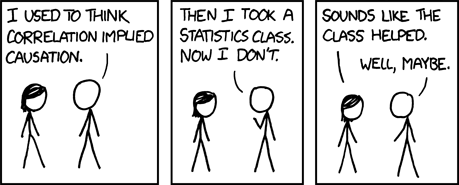
...because I totally do not understand it. I'll label this under lulz for now...
EDIT: Thanks to Rob for clearing this up for me. However, it still remains under lulz (I think...).
3/07/2009
I thought this was a joke.
Someone please tell me that this is a joke...

...though, living in a country where people regularly slurp up shrimp and crab brains, I suppose I can't be too surprised.

...though, living in a country where people regularly slurp up shrimp and crab brains, I suppose I can't be too surprised.
3/05/2009
Yes we can!
That ever popular slogan has graced the pages of the program for this school year's last Class Match day.

Also, a little late, but I just found this picture in the recesses of my camera phone. Way to shoot for the stars kid!


Also, a little late, but I just found this picture in the recesses of my camera phone. Way to shoot for the stars kid!

3/04/2009
Automatic Language Growth
An interesting article that I stumbled upon, regarding language learning via intensive listening. Interesting read, but it raises a few questions. Here are a few salient points:
"The Listening Approach, which is known in more recent years as Automatic Language Growth, is the method which states that any attempt to speak or even think of the language to be learned before automatic speaking comes, will cause damage and limit final results."
If adults learn a language thorough an intensive year of listening, they will be able to know how the language sounds and how it should be used. Adults will be able to learn the language naturally and then will be able to express themselves fluently even with clear pronunciation.
Adults are more conscious of language and are thinking of sentence structures, substitutions, rules, translations, and grammar. Thinking about these things prevents adults from speaking naturally, like native speakers of the language. Confusing the grammar of their own language with the grammar of the language they are currently learning."
Let's forget for a moment that the article itself is poorly written and only skims the surface of ALG. It raises a few questions in my mind.
Sure kids learn via listening to the conversations around them to be sure, but do they never speak? If they're still infants, yes. But what about later, when they are able to speak? Is the 6 months prior to when a child starts speaking that 6 months the author is talking about? Consider further that an infant is experiencing many things in his or her environment for the first time. They may have no predisposition to a given situation and so must build their language structure from the ground up to frame their understanding of it.
So what about when it comes to adult learners? Yes, listening helps. But the problem that adults suffer from is that they already have a fully formed language system in their heads. Any listening they do will necessarily have to go through that system before it can be analyzed and digested, because it is via language that we interact with our environment. I'm sure that I'm not the only one that thinks in their head, IN ENGLISH, "What the fuck?" when I see something WTF-worthy, even if I'm immersed (as I am) in a foreign environment.
Yes, a learner will be able to forge connections between what they hear, the context they hear/see it in, and establish an analogue in their native tongue, but it's just as likely that errors will crop up as well, causing fundamental misinterpretations. Perhaps the year-long intensive listening program helps with that, forcing corrections as learners catch onto their errors as their language ability improves, further internalizing this new structure?
This turned into a lot longer post that I had intended. In defense of the article, it's written for a school, most likely as an advertisement of their methods, or at least an an interest piece in the landscape of language learning. As well, my ideas are a reaction to the article itself, without further investigation into a more academic explanation of ALG.
I'm also procrastinating making a lesson.
Read the original article HERE.
"The Listening Approach, which is known in more recent years as Automatic Language Growth, is the method which states that any attempt to speak or even think of the language to be learned before automatic speaking comes, will cause damage and limit final results."
If adults learn a language thorough an intensive year of listening, they will be able to know how the language sounds and how it should be used. Adults will be able to learn the language naturally and then will be able to express themselves fluently even with clear pronunciation.
Adults are more conscious of language and are thinking of sentence structures, substitutions, rules, translations, and grammar. Thinking about these things prevents adults from speaking naturally, like native speakers of the language. Confusing the grammar of their own language with the grammar of the language they are currently learning."
Let's forget for a moment that the article itself is poorly written and only skims the surface of ALG. It raises a few questions in my mind.
Sure kids learn via listening to the conversations around them to be sure, but do they never speak? If they're still infants, yes. But what about later, when they are able to speak? Is the 6 months prior to when a child starts speaking that 6 months the author is talking about? Consider further that an infant is experiencing many things in his or her environment for the first time. They may have no predisposition to a given situation and so must build their language structure from the ground up to frame their understanding of it.
So what about when it comes to adult learners? Yes, listening helps. But the problem that adults suffer from is that they already have a fully formed language system in their heads. Any listening they do will necessarily have to go through that system before it can be analyzed and digested, because it is via language that we interact with our environment. I'm sure that I'm not the only one that thinks in their head, IN ENGLISH, "What the fuck?" when I see something WTF-worthy, even if I'm immersed (as I am) in a foreign environment.
Yes, a learner will be able to forge connections between what they hear, the context they hear/see it in, and establish an analogue in their native tongue, but it's just as likely that errors will crop up as well, causing fundamental misinterpretations. Perhaps the year-long intensive listening program helps with that, forcing corrections as learners catch onto their errors as their language ability improves, further internalizing this new structure?
This turned into a lot longer post that I had intended. In defense of the article, it's written for a school, most likely as an advertisement of their methods, or at least an an interest piece in the landscape of language learning. As well, my ideas are a reaction to the article itself, without further investigation into a more academic explanation of ALG.
I'm also procrastinating making a lesson.
Read the original article HERE.
Subscribe to:
Posts (Atom)